.jpeg)
Exhibition Reviews
Open Offering 1 (2024)
Reading Time: 3 minutes
Updated on: 04/04/2024
Michael Marder’s Plant-Thinking philosophical concept challenges traditional views of the intelligence and cognitive functions of plants, believing that plants exhibit forms of sensing, responding, and communicating with the environment. Currently, the sole member of abouttoask collective, John Chew Jeronimo Jr.’s project called Open Offering 1 resonates with Marder’s Plant-Thinking concept. The project was displayed in Art Outreach’s gallery at Gillman Barracks from 16 to 24 March 2024 as part of their [hearth] programme.
Art Outreach’s gallery space is relatively small thus when visitors first enter the space, they are already greeted by the main part of the project; the large shed in the middle of the gallery. Following the layout of the exhibition, on the wall in front of the entrance, a botanical drawing of a Delonix Regia tree and images of the shed with the tree are clipped onto a large grid panel. This tree, located in Kent Ridge, plays a crucial aspect in this project, such that the shed was built in response to it. John Chew mentions that the idea first came to mind when he saw the branches of the tree reaching out towards the footpath. It seemed like it was a sentient being, almost seeking communication with mankind. Hence, he created the shed to provide a space where passersby, animals, and the tree can converge as one.
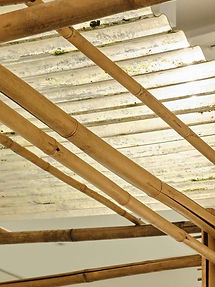
The exhibition centres on the reconstruction of the shed in a new space. Despite it not being at its intended location, in Kent Ridge, John Chew manages to find a way to ensure the connection between the tree and the shed remains while in the gallery. Displayed on the left wall of the shed is a map with a red-string pulley system to show how he had geographically positioned the shed to be facing the tree, building a spiritual connection with the tree albeit the distance. John Chew’s interest in the intersections of architecture, art, nature, and culture is prevalent in the making of the shed itself. The shed has a raw yet finished look to it partly due to it having been placed outdoors for months. It brings some sort of primal yet nostalgic appeal, reminding visitors of the small garden sheds for individuals to bask in nature in their neighbourhood garden. The shed’s structure is wholly made of bamboo poles, with a clear plastic roof sheet to provide shelter. Three bamboo stools are also made as part of the work to encourage people to sit with the tree as they participate in the activity of punching holes into the exhibition ‘leaflets’—a clever word-play by John Chew.
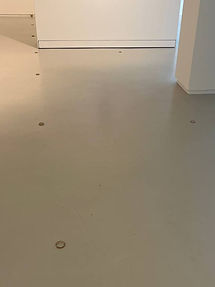
Surrounding the shed, on the floor, are slices of bamboo placed with precision as it acts as a grid, akin to the grid we see in maps. It makes the visitors cautious of where they walk as they could accidentally move pieces of the grid. This display is unique and a great way to make visitors unknowingly participate in the work. Along with other pieces of the project, is a long scroll of drafting paper that takes up the entire length of the right wall. John Chew had used it to document the changes to the shed through the mark-making of the shed’s plastic roof fortnightly over several months. He mentions that he realised the mark-making had documented the effects of weather patterns on the tree, with rainy seasons having barely any leaf markings and fruit-bearing seasons having been covered with fallen fruit markings.
Although it is quite off-putting to view a shed that belongs outdoors being enclosed in white walls, the exhibition manages to bring new life into the project. The rather distant spiritual feel to it has allowed space for thinking, especially regarding materials or objects being in unconventional spaces. Overall, the exhibition has made me more aware of how I can incorporate information about other aspects of life that have been taught to me into my art as well. One of my previous artworks titled “Come Full Circle” touches briefly upon the subject of lost spaces and identity. Thus, I thought about the idea of wanting to create a space for people who feel that they have a lost cultural identity, with the same drive to connect with others as well as the land as an extension of that artwork in the possible future.

.jpeg)

.jpeg)
.jpeg)


.jpeg)
.jpeg)